
In the modern digital world, technology is evolving faster than ever. Businesses, developers, and even students are relying more on online services to store data, run applications, and manage digital systems. One of the most important technologies enabling this shift is cloud computing.
Cloud computing has changed the way organizations operate. Instead of storing files or running programs on local computers or servers, companies can now use powerful remote servers connected through the internet. This approach makes it easier to access data, scale operations, and reduce technology costs.
In this guide, we will explain what cloud computing is, how it works, compare AWS vs Google Cloud vs Azure, and explore the key benefits of cloud computing for businesses.
Table of Contents
ToggleWhat Is Cloud Computing?
Cloud computing is a technology that allows users to store data, run applications, and access computing resources over the internet instead of using local servers or personal computers.
In simple terms, cloud computing means using online servers—often called “the cloud”—to manage and process information.
Instead of installing software on a single device, cloud platforms allow users to access applications and data from anywhere with an internet connection.
Common examples of cloud computing include:
-
Online storage services
-
Streaming platforms
-
Web-based email services
-
Online document editing tools
-
Cloud-based business software
Most people already use cloud services every day without even realizing it.
How Cloud Computing Works
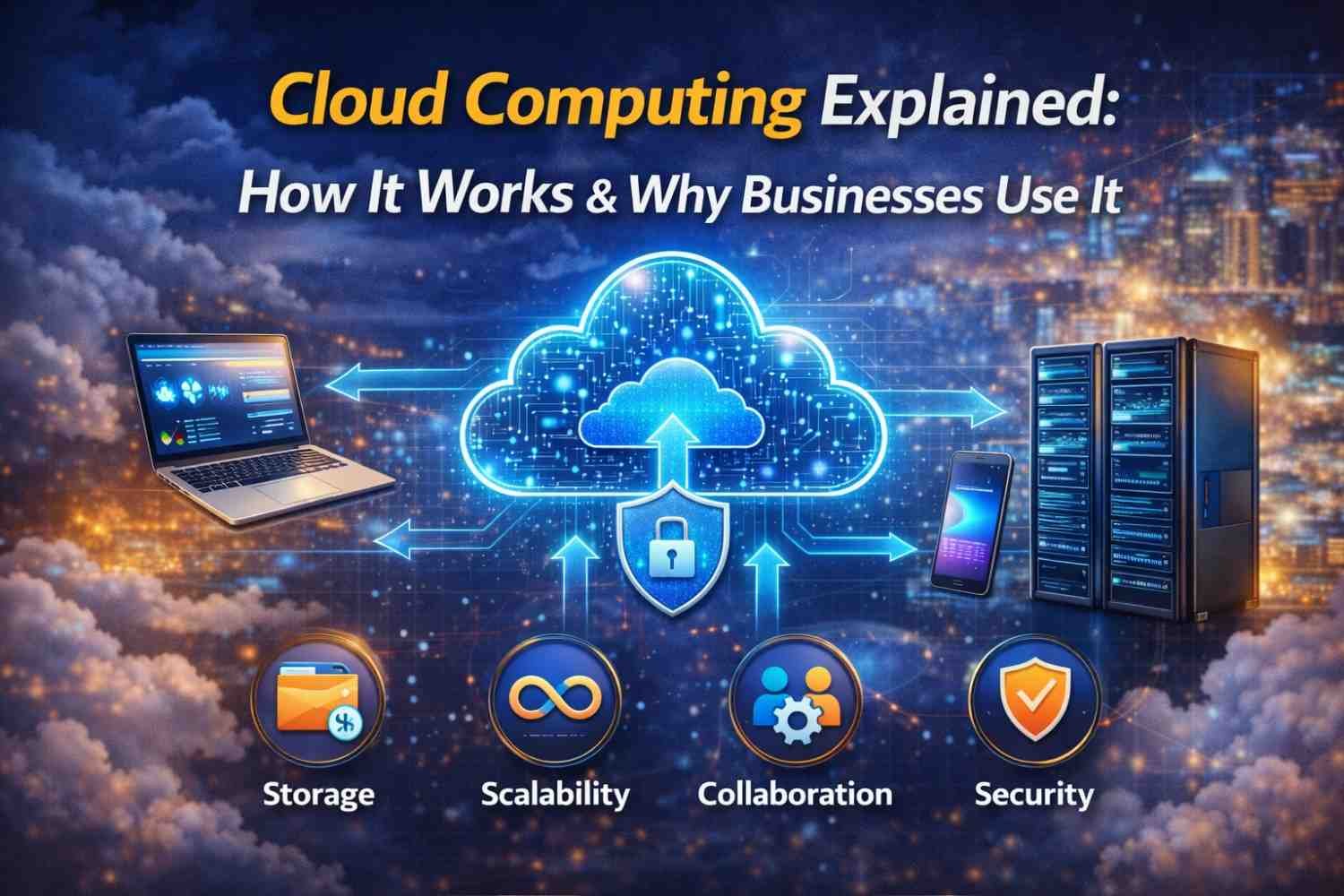
Cloud computing works through a network of powerful remote servers located in large data centers. These servers store data and run applications that users can access through the internet.
When you upload a file to a cloud storage service, it is stored on a remote server rather than on your personal device.
When you open that file later, the cloud platform retrieves it from the server and displays it on your device.
This system allows users to access their data from multiple devices such as smartphones, laptops, and tablets.
Types of Cloud Computing Services
Cloud computing services are usually divided into three main categories depending on the type of service provided.
Infrastructure as a Service (IaaS)
Infrastructure as a Service provides basic computing resources such as servers, storage, and networking through the cloud.
Businesses can rent these resources instead of buying and maintaining their own physical servers.
Examples include virtual machines and cloud storage systems.
Platform as a Service (PaaS)
Platform as a Service provides a complete environment where developers can build, test, and deploy applications.
Developers do not need to manage the underlying hardware or operating systems.
This allows software development teams to focus on creating applications rather than managing infrastructure.
Software as a Service (SaaS)
Software as a Service allows users to access applications directly through a web browser without installing software on their devices.
Popular SaaS applications include:
-
Online office tools
-
Email platforms
-
Customer relationship management software
-
Project management tools
SaaS is one of the most widely used forms of cloud computing today.
AWS vs Google Cloud vs Azure
Several major technology companies provide cloud computing services. Among the most popular cloud platforms are Amazon Web Services (AWS), Google Cloud, and Microsoft Azure.
Each platform offers powerful features and is used by businesses around the world.
Amazon Web Services (AWS)
Amazon Web Services is one of the largest and most widely used cloud computing platforms.
It provides hundreds of services for computing, storage, databases, artificial intelligence, and machine learning.
AWS is popular because it offers a wide range of tools that can support businesses of all sizes.
Key advantages of AWS include:
-
Large global infrastructure
-
Wide range of cloud services
-
Strong reliability and scalability
-
Extensive developer tools
Many startups and large organizations rely on AWS for their cloud infrastructure.
Google Cloud Platform (GCP)
Google Cloud Platform is another powerful cloud provider known for its strong data analytics and artificial intelligence capabilities.
Google Cloud is often used by companies that rely heavily on data analysis and machine learning.
Key advantages include:
-
Advanced data analytics tools
-
Strong AI and machine learning services
-
Fast global network infrastructure
-
Integration with Google services
Many technology companies choose Google Cloud for its advanced data processing capabilities.
Microsoft Azure
Microsoft Azure is a major cloud platform widely used by businesses that already rely on Microsoft products.
Azure integrates well with software such as Windows Server, Microsoft Office, and enterprise tools.
Key advantages of Azure include:
-
Strong enterprise support
-
Integration with Microsoft ecosystem
-
Wide range of cloud services
-
Hybrid cloud capabilities
Large organizations often choose Azure because it works well with their existing Microsoft infrastructure.
Benefits of Cloud Computing for Businesses
Cloud computing offers many advantages that help businesses operate more efficiently and grow faster.
Lower Technology Costs
Traditional IT infrastructure requires businesses to purchase servers, maintain hardware, and manage data centers.
Cloud computing eliminates many of these costs by allowing companies to pay only for the resources they use.
This pay-as-you-go model makes cloud technology more affordable for many organizations.
Scalability and Flexibility
Cloud platforms allow businesses to scale their resources up or down depending on their needs.
For example, a company experiencing rapid growth can quickly increase its computing capacity without purchasing new hardware.
This flexibility helps businesses respond quickly to changing demands.
Improved Collaboration
Cloud-based tools allow teams to collaborate more easily by sharing documents and accessing files from different locations.
Employees can work together in real time, even if they are located in different parts of the world.
This is especially useful for remote teams and global organizations.
Better Data Security
Major cloud providers invest heavily in security technologies to protect user data.
Cloud platforms often include features such as encryption, identity management, and security monitoring.
While no system is completely immune to cyber threats, cloud providers typically offer stronger security than many traditional systems.
Automatic Updates and Maintenance
Cloud service providers handle system updates, maintenance, and security patches automatically.
This reduces the workload for internal IT teams and ensures that systems remain up to date.
Businesses can focus more on their core operations instead of managing complex technology infrastructure.
Challenges of Cloud Computing
While cloud computing offers many benefits, there are also some challenges that organizations must consider.
Internet Dependence
Cloud services require a reliable internet connection. Without internet access, users may not be able to access their data or applications.
Data Privacy Concerns
Some organizations worry about storing sensitive data on external servers managed by third-party providers.
Companies must carefully evaluate security policies and compliance requirements when choosing cloud services.
Service Costs Over Time
Although cloud computing can reduce upfront costs, long-term usage of cloud services can become expensive if not managed properly.
Businesses need to monitor their usage to control costs.
The Future of Cloud Computing
Cloud computing continues to evolve as technology advances. Emerging technologies such as artificial intelligence, edge computing, and advanced data analytics are expected to further expand cloud capabilities.
More organizations are adopting hybrid cloud strategies that combine private and public cloud systems.
In the future, cloud platforms will likely become even more powerful, efficient, and integrated with other digital technologies.
Final Thoughts
Cloud computing has transformed the way businesses and individuals use technology. By providing flexible access to computing resources over the internet, cloud platforms allow organizations to store data, run applications, and scale operations more efficiently.
Major providers such as AWS, Google Cloud, and Microsoft Azure offer powerful tools that support businesses of all sizes.
As companies continue to adopt digital technologies, cloud computing will remain a key foundation of modern innovation.
Understanding how cloud computing works and how it benefits businesses can help individuals and organizations make better technology decisions in an increasingly connected world.